
 I hear lots of conversations about using AI to improve incident investigations. What I don’t hear is much critical thinking about AI in Safety. I usually hear two perspectives on AI and investigation improvement, the Salesperson and the Ostrich . The Salesperson believes a sprinkle of AI magic will improve investigations and the Ostrich is hoping if they keep their head down AI will soon go away. Neither perspective is going to help people in safety and risk work out how to respond to the opportunities and challenges of AI.
My perspective on AI in Safety investigations is one of scepticism. AI uses so far seem focused on getting faster at producing the same. That is, faster at producing reports and lists of actions which do not help people tackle risk and safety. AI may result in you learning the same things over and over again just faster (see "The AI Mirror How to Reclaim Our Humanity in an Age of Machine Thinking" by Shannon Vallor and https://lnkd.in/gDbeZ7yr). AI can help process large amounts of data and if that data is good quality this may be a good thing to do. But in Safety much of the data that gets collected is not useful. AI may just be a way of turbo charging the bad habits your investigation program already has. So if you want to use AI (or any other technology) to get better at investigating incidents here’s some questions you could ask about your current investigation program; - How do we show care for people when we investigate? - Why do we investigate incidents? - How do emotions, feelings and relationships help us investigate? - How do we ensure our approach to investigations is ethical? - What don’t we investigate and why not? - Why do we want to get better at this? - What will improvement look, feel and sound like? - How does our culture need to change for us to get better at investigations? - What stories do we tell after investigations are complete? - What language do we use in relation to risk, safety and investigations? - What can technology bring to this problem? - How could technology make this problem worse? Neither the Salesperson or the Ostrich want to ask these questions, let alone answer them. If you want to use AI to improve investigations do some critical thinking first to ensure you understand the culture, worldviews and practices associated with your investigations. Second work out what better could look like and what that means for the people in your organisation. And finally ask if AI or any other technology is needed.
0 Comments
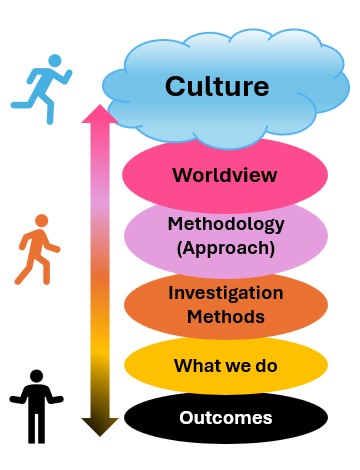 When I design safety investigation training I try to make the training meaningful to the people in the class. I include training in investigation methods but the most exciting part is helping people reflect on their worldview in relation to safety and investigations.
A worldview is a set of beliefs we hold about how the world is. Other words we use as an alternative include mindset or philosophy. Our worldview guides how we make sense of the world around us, how we think, how we know, what we value and how we act. Most of us spend very little time thinking about our worldview. We tend to be much more focused on just doing. In safety investigations a lack of thinking about worldview shows up as a dogmatic compliance to following a method. Completing investigations becomes an end in and of itself. This results in many organisations doing too many investigations. In organisations there are always too few people with too little time to complete a large number of investigations thoroughly. I remember working 8 days on, 6 days off on a mine site. When I was off site there was another Safety Advisor working as my back to back. It was not unusual for them to handover an incomplete investigation at the start. I would complete a second investigation and handover a third incomplete investigation at the end of my time on site. When I ask the people I train how many investigations they have on the go at any one time, at least three is a very common answer. When people are trying to do so many investigations they do not have time to reflect on how their worldview influences what they do. Completing the investigation is the only goal. Getting the investigation done in order to move on to the next one is all that matters. When getting it done is the priority, having a method to follow (e.g. Taproot, ICAM, 5 Whys, Fishbone) feels essential. The method helps people to be efficient, reduces the need to plan how to investigate and provides a communication shortcut. In an organisation with an agreed method everyone understands what needs to be done, what is expected and what the outcomes should look like. This is all very efficient but not great for learning. Traditional investigation training will help people get better at following a method. My preference is to provide a place for people to reflect on their worldview. My hope is that people will start asking themselves questions about how their worldview influences their perceptions, thoughts, decisions and actions in relation to safety and investigations. I want people to walk away from the training with a slightly quizzical look on their face, not stride out confidently knowing exactly how a method should be used every time. 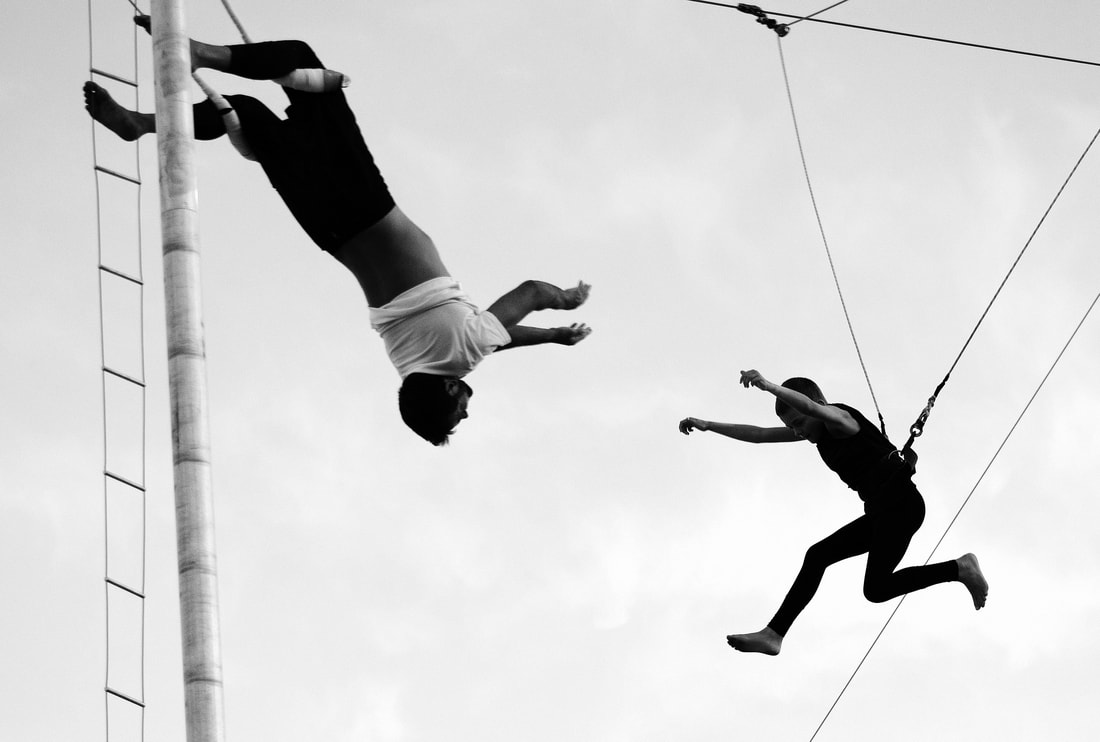 When I coach investigation teams I am listening to the language being used.
If investigation team members use words like, evidence, corroborate or statements that tells me something about how they see the people involved. Often the language used suggest that their worldview is one in which people are unreliable components in a system or process and that their behaviour has not lived up to expectations e.g. "they didn't follow procedures", "it’s a behavioural issue", "they were not compliant". The Social Psychology of Risk training I have completed has helped me listen more deeply than I used to. One of the most important books I read was Martin Buber's book I and Thou. This book is about the nature of our relationships with one another and how real connection occurs. Buber made a distinction between two ways of being with others. I-It and I-Thou. We can experience other people as objects and use whatever power we have to get what we need from them or in I-Thou we can truly meet people. When Investigators meet the people involved in incidents there is a choice to be made about how they approach that meeting. In I-It the people we interview become the "IP" (Injured or Involved Person), the "witness", somebody who holds information that we need to prise out of them - they are objects of our attention. In investigation interviews the Investigator uses their power to get to "truth". The interviewees feelings, emotions and concerns are something to manage so that the truth can be reached. In the I-Thou meeting something different happens. There is a meeting between two people in which a social relationship is created. If those two people meet well then the meeting helps them both. A by-product of this may be that the investigator appreciates the person who they have met in a way that will help them represent that person during the remainder of the investigation. In the picture you can see my son trying out trapezing. Like the I-Thou meeting, both my son and the expert trapeze artist are taking risks. The power of the expert to control what happens is in no doubt here but they expose themselves to risk to ensure my son can enjoy trapezing. A good Investigator will expose themselves to risk during a conversation with somebody involved in an incident. They will be aware of their power but resist using that power to get what they want. You can read I and Thou for free here https://www.maximusveritas.com/wp-content/uploads/2016/04/iandthou.pdf |
AuthorJames Sullivan has been helping people tackle risk for 25 years in Australia and the UK. ArchivesCategories
|