Pivot Safety
  • Home
  • Services
  • Contact
  • Blog
  • Home
  • Services
  • Contact
  • Blog
Search

Things I am learning - The Pivot Safety Blog

Investigation and Worldviews

9/10/2025

0 Comments

 
Picture
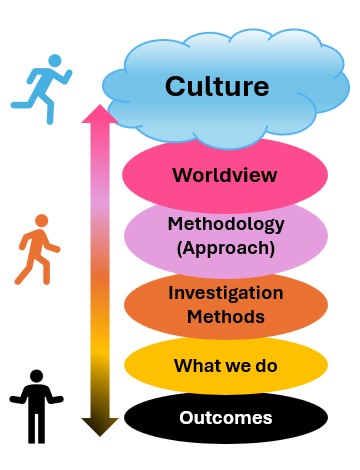
When I design safety investigation training I try to make the training meaningful to the people in the class. I include training in investigation methods but the most exciting part is helping people reflect on their worldview in relation to safety and investigations.

A worldview is a set of beliefs we hold about how the world is. Other words we use as an alternative include mindset or philosophy. Our worldview guides how we make sense of the world around us, how we think, how we know, what we value and how we act. Most of us spend very little time thinking about our worldview. We tend to be much more focused on just doing.

In safety investigations a lack of thinking about worldview shows up as a dogmatic compliance to following a method. Completing investigations becomes an end in and of itself. This results in many organisations doing too many investigations.

In organisations there are always too few people with too little time to complete a large number of investigations thoroughly. I remember working 8 days on, 6 days off on a mine site. When I was off site there was another Safety Advisor working as my back to back. It was not unusual for them to handover an incomplete investigation at the start. I would complete a second investigation and handover a third incomplete investigation at the end of my time on site. When I ask the people I train how many investigations they have on the go at any one time, at least three is a very common answer. When people are trying to do so many investigations they do not have time to reflect on how their worldview influences what they do. Completing the investigation is the only goal. Getting the investigation done in order to move on to the next one is all that matters.

When getting it done is the priority, having a method to follow (e.g. Taproot, ICAM, 5 Whys, Fishbone) feels essential. The method helps people to be efficient, reduces the need to plan how to investigate and provides a communication shortcut. In an organisation with an agreed method everyone understands what needs to be done, what is expected and what the outcomes should look like. This is all very efficient but not great for learning.

Traditional investigation training will help people get better at following a method. My preference is to provide a place for people to reflect on their worldview. My hope is that people will start asking themselves questions about how their worldview influences their perceptions, thoughts, decisions and actions in relation to safety and investigations. I want people to walk away from the training with a slightly quizzical look on their face, not stride out confidently knowing exactly how a method should be used every time.
0 Comments


Leave a Reply.

    Author

    James Sullivan has been helping people tackle risk for 25 years in Australia and the UK.

    Archives

    October 2025

    Categories

    All

    View my profile on LinkedIn
Site powered by Weebly. Managed by CheaperDomains.com.au
  • Home
  • Services
  • Contact
  • Blog